 |
|||||
|




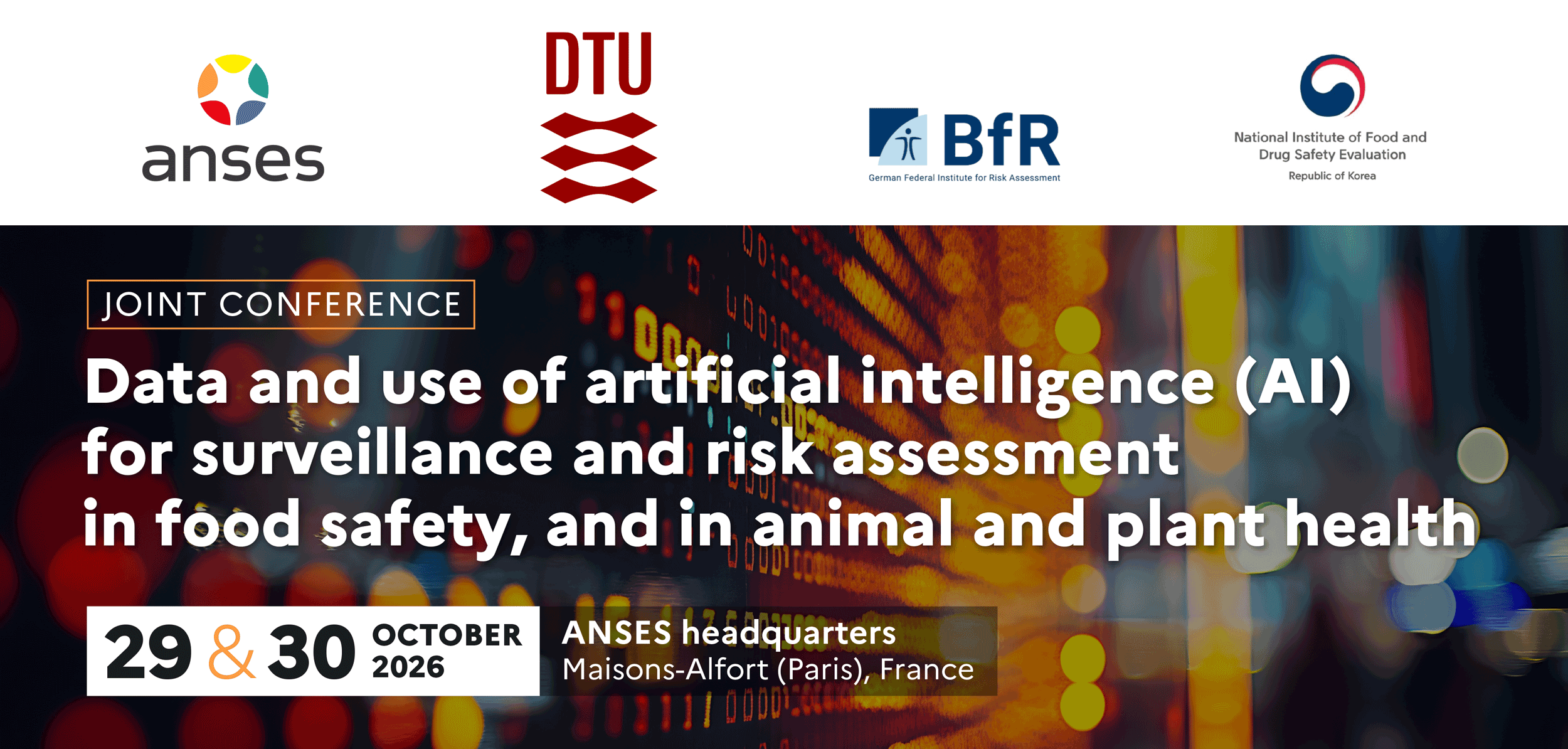
| PROVISIONAL PROGRAMME | ||||
| THURSDAY 29 OCTOBER 2026 (AFTERNOON) |
||||
| DAY 1 / Foundations of Artificial Intelligence: Understanding, Trust and Data |
||||
| 13:30 | Registration | |||
| 14:00 | Opening remarks - ANSES | |||
| 14:10 | Opening Keynote - AI: What Are We Talking About? Concepts, Methods and Limitations |
|||
| Prof. Dr Patrick Glauner, Deggendorf Institute of Technology, Germany | ||||
| Questions | ||||
| 15:00 | SESSION 1 / Validation, Explainability and Trust | |||
| Keynote - From Data to Evidence: Building Trust in AI-Enabled Scientific Workflows | ||||
| Dr. Nina Jeliazkova, Ideaconsult, Ltd, Burlgaria | ||||
| Establishment of Readiness Criteria for AI-based tools for risk assessment: READYAI | ||||
| Dr. Joyce de Paula Souza, Swiss Centre for Applied Human Toxicology, University of Basel, Switzerland | ||||
| Title to be confirmed | ||||
| Dr. Moez Sanaa, International Food Risk Analysis Consortium (IFORAC), France | ||||
| Trusting AI Without Losing Control: A Modeller’s Perspective | ||||
| Laurent Guiller, ANSES, France | ||||
| 16:30 | Coffee break | |||
| 17:30 | SESSION 2 / Data and Omics as the Foundation of AI | |||
| Paper2Model Agents in RAKIP | ||||
| Matthias Filter, German Federal Institute for Risk Assessment (BfR), Germany | ||||
| A Retrieval-Augmented Natural Language Interface for Data Description and Meta-Analysis in the Pathogens-in-Foods (PIF) Database |
||||
| Ursula Gonzales-Barron, Polytechnic Institute of Bragança (IPB), Portugal | ||||
| From Omics Data to Biological Insights: The Role of AI in Nanosafety | ||||
| Andrea Haase, German Federal Institute for Risk Assessment (BfR), Germany | ||||
| 18:00 | Cocktail | |||
| FRIDAY 30 OCTOBER 2026 (FULL DAY) |
||||
| DAY 2 / From Models to Decision-Making | ||||
| 8:30 | Registration and welcome coffee | |||
| 9:00 | Welcome | |||
| 9:15 | SESSION 3 / AI for risk assessment | |||
| Keynote - title to be confirmed | ||||
| Dr. Didier Verloo, Head of Knowledge, Innovation and Partnerships - European Food Safety Authority (EFSA), Italy | ||||
| Implementation of AI-Based Support Systems in the Risk Assessment of Microorganisms | ||||
| Federal Office of Consumer Protection and Food Safety (BVL), Germany | ||||
| Artificial Intelligence in Food Safety | ||||
| Dr. Floor van Meer, Wageningen Food Safety Research, The Netherlands | ||||
| AI in Regulatory Food and Feed Safety Assessment: Current Uses, Challenges and Priorities |
||||
| ILMERAC | ||||
| Title to be confirmed | ||||
| Moez Sanaa, International Food Risk Analysis Consortium (IFORAC), France | ||||
| 10:45 | Coffee break | |||
| 11:15 | SESSION 4 / AI for Surveillance and Early Detection | |||
| PIFAlert: An Explainable, Evidence-Aware Recommender System for Foodborne Pathogen Surveillance | ||||
| Vasco Cadavez, Animal Science Department - Polytechnic Institute of Braganza (IPB), Portugal | ||||
| Toward Predictive Food Safety: Korea's Experience with AI-Enabled Surveillance, Early Detection, and Risk Assessment |
||||
| Hyang Sook Chun, Department of Food Science and Technology, Chung-Ang University, South Korea | ||||
| 12:05 | Lunch | |||
| 13:30 | SESSION 5 / Case Studies and Implementation | |||
| A Machine Learning Framework for Food Source Attribution of Listeria monocytogenes | ||||
| Isis Lorenzo, ANSES, France | ||||
| Leveraging Large Language Models to Capture Emerging Food Practices Relevant to Microbial Risk Assessment under Climate Change | ||||
| Estelle Chaix, ANSES, France | ||||
| AI-assisted Risk Negotiation | ||||
| Dr. Alex Fetsch, German Federal Institute for Risk Assessment (BfR), Germany | ||||
| Mapping the Risk of West Nile Virus in Equines in Europe | ||||
| Eric Morignat, ANSES, France | ||||
| Automating Food Classification Using LLMs: Application to the European FoodEx2 Classification System | ||||
| Thomas El Khilali, ANSES, France | ||||
| 15:45 | CLOSING ROUNDTABLE / AI in Risk Analysis: What is Realistic in the Next 5–10 Years? |
|||
| 16:15 | Conclusions and closing remarks | |||
| Copyright © 2026 Ptolémée. |